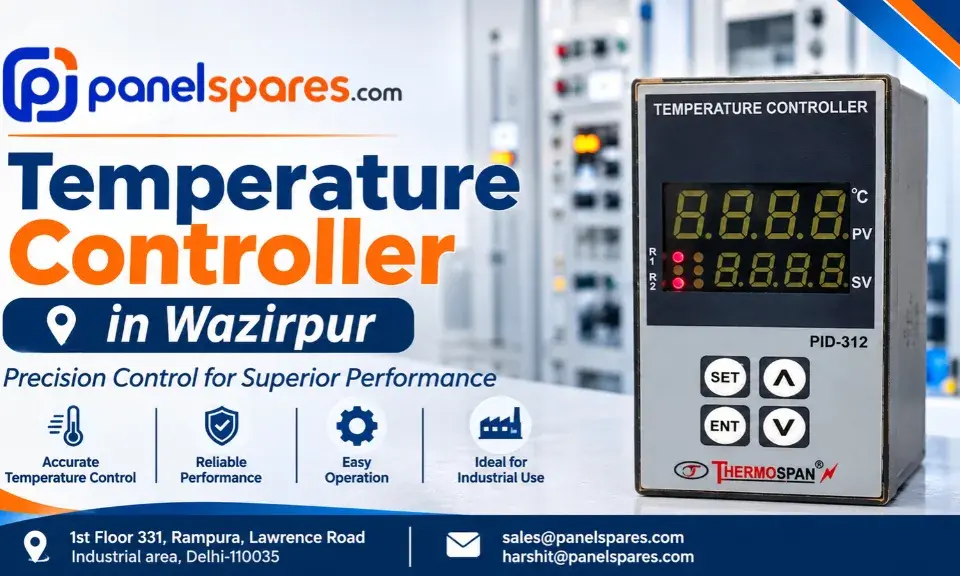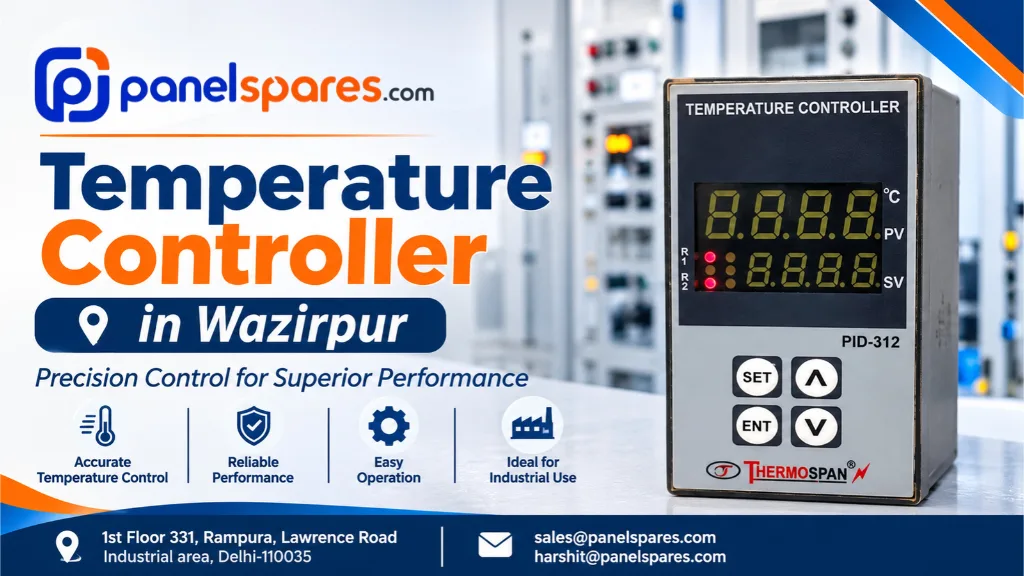
Temperature Controller in Wazirpur: How to Pick the Right One Before You Buy
November 26, 2026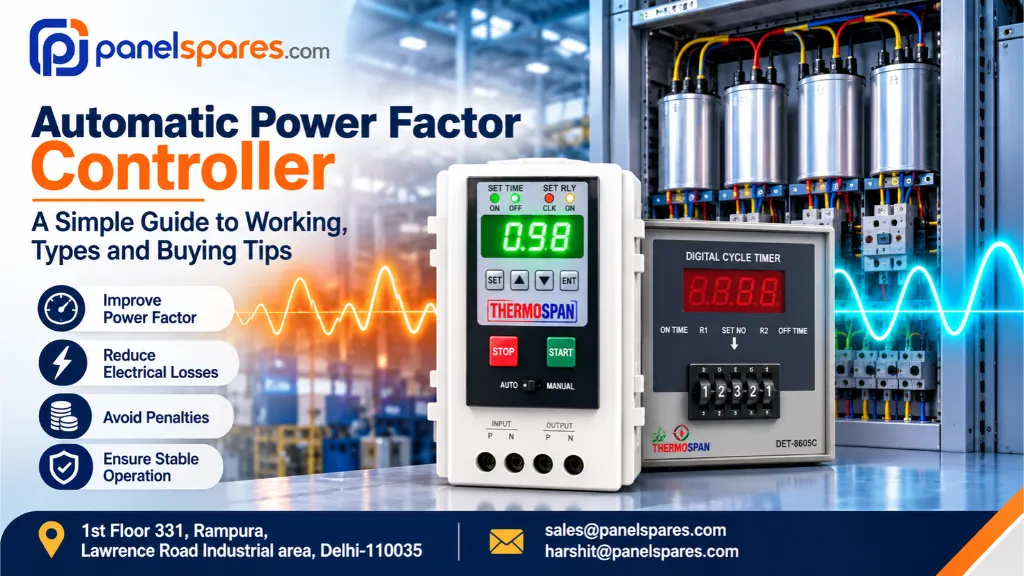
Automatic Power Factor Controller: A Simple Guide to Working, Types and Buying Tips
A low power factor quietly raises the cost of running a factory. Motors, pumps, compressors and transformers draw reactive power, and when that share grows, your utility may add penalties to the bill. An Automatic Power Factor Controller keeps this under control by adding or removing capacitor steps as the load changes.
Compares the main options, and shares practical buying advice for Panel builders, Contractors and Maintenance Teams in Delhi NCR.
What Is Power Factor?
Power factor shows how effectively your equipment turns supplied power into useful work. A value near 1.0 is ideal. Inductive loads such as motors pull the number down. A low value means higher current for the same useful output, more heat in cables and switchgear, and, in many tariffs, extra charges.
What Does an Automatic Power Factor Controller Do?
An Automatic Power Factor Controller, also called an APFC relay, is the brain of an APFC panel. It reads current from a CT and voltage from the supply, calculates the live power factor, and compares it with your target. When the reading is low, the controller signals contactors to switch in capacitor steps. When the load falls, it switches steps out so the system does not overcorrect.
Overcorrection matters. Too much capacitance at light load can push the power factor into the leading zone and raise voltage. A properly set Automatic Power Factor Controller avoids this by matching capacitor steps to real demand.
How It Works, Step by Step
- A current transformer (CT) senses the load current.
- The Automatic Power Factor Controller measures the angle between voltage and current.
- It compares the result with your target power factor.
- It switches capacitor steps on or off through contactors.
- It keeps monitoring and repeats the cycle.
Most installation problems come from wrong CT placement or wiring, not from the Automatic Power Factor Controller. The CT must measure the total load current of the circuit you are correcting.
Benefits of an Automatic Power Factor Controller
- Helps avoid low power factor penalties where your tariff applies them
- Lowers current draw, which can reduce heating and losses
- Shows readings and alarms on many models
Be realistic: it improves power factor but does not reduce the energy your machines actually use. Savings depend on your tariff and load pattern.
Not All Capacitor Solutions Are the Same
Buyers sometimes treat every correction method as identical. They are not. The right choice depends on how fast and how often your load changes.
| Option | Best for | Response | Points to watch |
|---|---|---|---|
| Fixed capacitor | Steady, constant loads | None, always on | Can overcorrect at light load |
| APFC panel, contactor switching | Most factories with changing load | Seconds | Needs capacitor-duty contactors; frequent switching causes wear |
| APFC with thyristor switching | Fast-changing loads such as welding | Very fast | Higher cost; needs careful design |
| Detuned reactor with capacitors | Plants with harmonics | Depends on switching | Harmonic study needed first |
In every option, an Automatic Power Factor Controller decides when steps switch, but the capacitors, contactors and reactors must suit the load. Mismatched parts are a common cause of early failure.
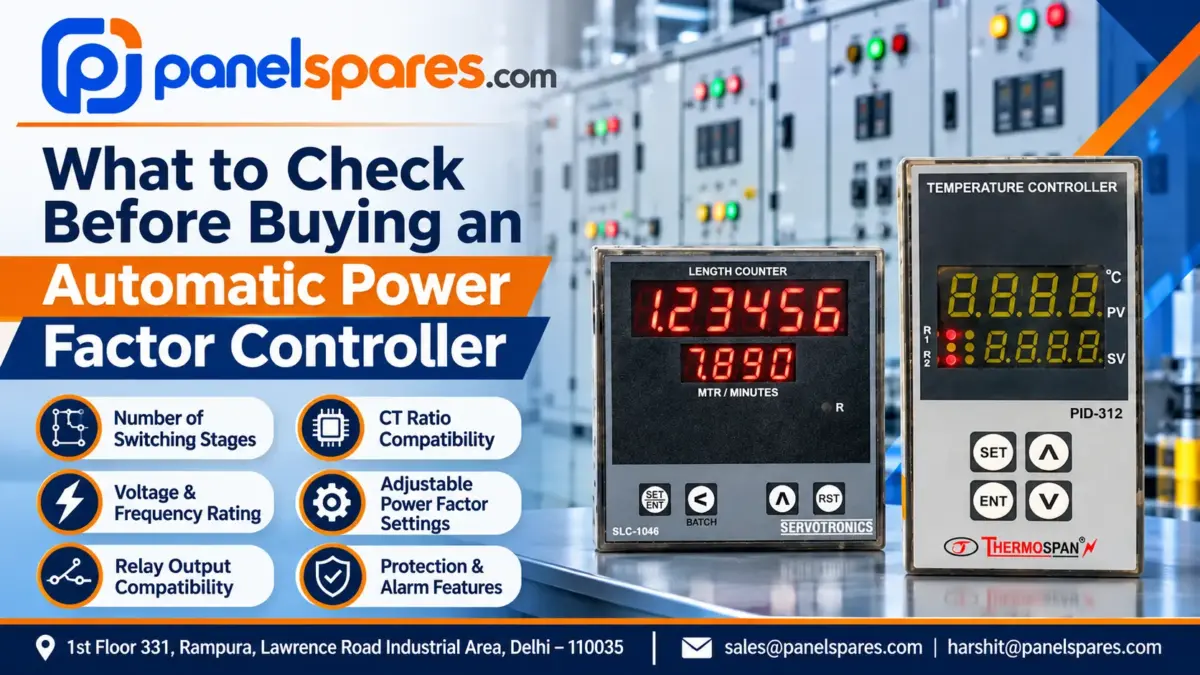
What to Check Before Buying an Automatic Power Factor Controller
- Number of stages: 4, 6, 8 or 12, matched to your capacitor steps
- CT input: compatible ratio and 1A or 5A secondary
- Supply voltage and frequency
- Adjustable target power factor and switching delay
- Display of power factor, kVAR, voltage and current
- Relay output rating suitable for your contactors
- Alarms such as over-voltage, under-voltage and overcompensation
- Panel cut-out size and mounting type
- Clear documentation, warranty and return terms
Before ordering, ask the supplier to confirm each specification. Share your panel kVAR rating, number of steps and CT details so the Automatic Power Factor Controller you receive fits the first time.
Common Mistakes to Avoid
- Placing the CT on only part of the load
- Using contactors that are not capacitor-duty rated
- Setting a target without checking utility rules
- Ignoring harmonics in the plant
- Skipping routine checks of capacitors and connections
Even a well-chosen Automatic Power Factor Controller depends on healthy capacitors and tight connections.a
Installation and Maintenance Tips
- Let a qualified electrician install it as per the panel drawing
- Test each step in manual mode first
- Set the target and delay time to suit site needs
- Inspect capacitors for bulging, heat or noise
Regular checks help your Automatic Power Factor Controller keep performing for years.
Sourcing Components from PanelSpares
PanelSpares supplies electrical control components and automation products for control panels and machinery from Rampura, Delhi. You can browse the Controllers, Power Electronics and Switchgear categories on the Products , read About Us, or Contact the team with details of your Automatic Power Factor Controller requirement. Share the product name, specifications, quantity and application so the team can guide you on suitable options and availability.
If you are building an APFC panel, you may also need related items such as digital panel meters and timer relays, which are part of the PanelSpares range.
Conclusion
A reliable Automatic Power Factor Controller helps keep power factor stable, protects your capacitors from overcorrection and supports efficient plant operation. Match its stages, CT input and ratings to your panel, and choose the correction method that suits your load. When you are ready to choose an Automatic Power Factor Controller, Contact PanelSpares with your specifications.
Contact PanelSpares for Your Enquiry
Need an Automatic Power Factor Controller for a new panel or replacement? Send your Enquiry to PanelSpares for suitable options and availability.
Address: 1st Floor 331, Rampura, Lawrence Road Industrial Area, Delhi – 110035
Email: sales@panelspares.com | harshit@panelspares.com
Follow us: Facebook | Instagram
Tell us how you will use your Automatic Power Factor Controller, and we will reply with suitable options.

Related posts